Understanding Zone Capacity and Scalability
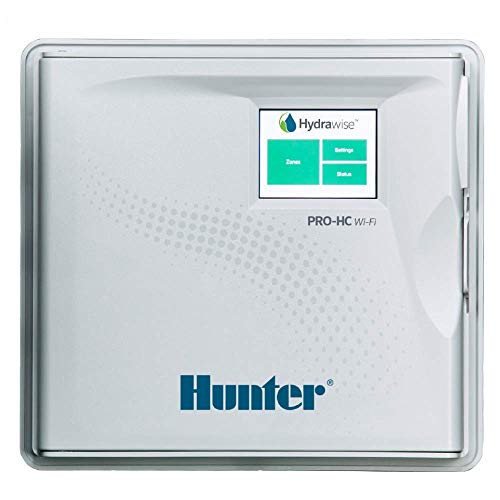
The first and most critical factor in your selection is the number of zones your landscape requires. Irrigation zones are essentially the individual areas of your yard that operate on their own schedule—such as a flower bed, a front lawn, and a drip irrigation line for shrubs. When browsing Hunter controllers, you will see options ranging from small 4-zone units to massive 24-zone or even higher capacity systems. Always aim for a little more capacity than you currently need. If you have 6 zones today but plan to add a vegetable garden or additional shrubbery next year, buying an 8-zone or 12-zone controller now prevents the expensive headache of replacing the entire unit later. Look for 'expandable' logic in the hardware design to ensure your system can grow alongside your landscaping.
Smart Technology vs. Traditional Scheduling
Hunter offers a spectrum of intelligence levels. Traditional controllers rely on manual programming where you input specific run times for specific days. While reliable, these are 'blind' systems—they will water your lawn during a rainstorm just as they would during a drought. Modern Hunter controllers often feature integrated 'Smart' capabilities, frequently utilizing Wi-Fi connectivity and weather-based adjustments. These high-end models connect to local weather stations to automatically skip watering cycles when rain is detected or increase duration during heatwaves. If you want a 'set it and forget it' experience that actively lowers your water bill, prioritize models with wireless connectivity and predictive weather intelligence.
User Interface and Control Methods
How you intend to interact with your system should dictate your choice. Some users prefer a physical interface located at the controller box itself, featuring tactile buttons and a clear LCD screen for quick adjustments while standing in the garage or near the water source. Others prefer a mobile-first approach, where every aspect of the irrigation schedule is managed via a smartphone application. Hunter's ecosystem often allows for both, but it is vital to check if the specific controller you are eyeing supports remote cloud management. If your controller is located in a hard-to-reach area, such as a basement or a remote corner of the property, a mobile-enabled controller is not a luxury—it is a necessity for ease of use.
Environmental Durability and Installation Needs
Consider where your controller will live. If the unit is going to be mounted outdoors, you must look for weather-resistant enclosures that are rated to withstand UV exposure and moisture. For indoor installations, focus more on the electrical compatibility and the ease of wiring the solenoid valves. Additionally, consider the complexity of your electrical setup. Some advanced controllers require more robust power inputs or specific wiring configurations to support their smart features. A controller that is too advanced for your current electrical setup can lead to installation hurdles that far outweigh the benefits of the technology.
Summary Recommendation Logic
To make your final decision, follow this hierarchy: First, count your zones and add a 20% buffer. Second, decide if you want to manually manage your water or let the weather do it for you (Smart vs. Traditional). Third, determine if you need to control the system from your phone. If you have a small, simple yard, a basic wired controller is sufficient. If you have a complex, multi-zone landscape with varied plant needs, invest in a Wi-Fi-enabled, weather-sensing controller to maximize both plant health and water savings.