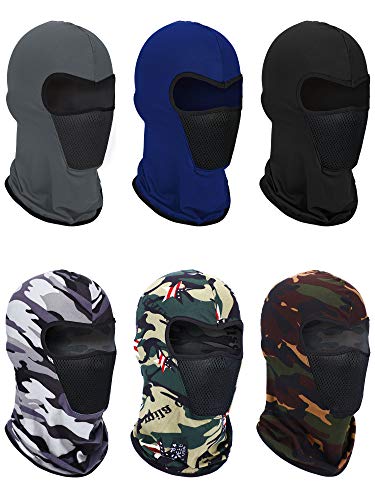


Sumind 6 Pieces Winter Balaclava Sun Mask Balaclava Face Mask Dust Protection Balaclava Outdoor Long Neck Cover For Men Women
SUMIND
- What you get: you will receive a total of 6 pieces of balaclava face covers with various colors, enough quantity to meet and satisfy your different needs in daily life, and you can also share with your families or good friends
- Delicate and practical design: these balaclava face masks designed long neck cover, can provide better protection for your face, neck, head, ears and nose, breathable material on the mouth part can make you breath comfortably without any effect, also sewing delicately and securely, with well good seams and can keep for a long time
- Functional balaclava mask: the balaclava masks are unisex, suitable for men and women, good items to keep from sun, dust and wind, you can wear it separately or wear under helmet, can be applied for skiing, snowboarding, cycling, climbing, hiking, fishing and many other various outdoor activities
- 6 Colors: there are 6 different colors, including solid colors and camouflage colors, easy and convenient to match with different kinds of clothes, no worry about no replacement. Note: the patterns may vary, so be careful about buying if you mind
- Material: these sun protection balaclava masks are made of polyester which is breathable and you can allow your eyes outside, won't affect your viewing, the material is soft and comfortable to wear, lightweight, easy to wash and dry quickly
| SELLER | SELLER SCORE | AMAZON FULFILLED | PRIME | FREE SHIPPING |
|---|---|---|---|---|
| Leextec | 9.93 | Yes | Yes | Yes |

