Understanding Brass Alloys and Compositions
The most critical decision in your purchase is selecting the correct alloy. Brass is an alloy of copper and zinc, but the varying ratios change the material's properties significantly. For general-purpose fabrication, C260 (70/30 Cartridge Brass) is a standard choice due to its excellent formability and deep drawing capabilities. However, if your project involves high-friction environments or requires superior corrosion resistance, you may need to look toward C360 Free-Cutting Brass. This alloy contains small amounts of lead, which acts as a lubricant during machining, allowing for much faster tool speeds and a smoother surface finish, though it is less suitable for heavy forming or welding. If the application is marine-based, prioritize high-copper alloys to prevent dezincification.
Temper and Hardness Levels
The 'temper' of a brass bar refers to its hardness and ductility, which is achieved through the cold-working process. You will typically encounter three main categories: Soft, Half-Hard, and Full-Hard. Soft brass is ideal for intricate bending and shaping, as it has a high degree of plasticity. If you intend to bend the bar into tight radii without cracking, stay in the soft temper range. Conversely, if the bar is meant to serve as a structural component or a decorative trim that must resist denting and warping, choose a Full-Hard temper. Be aware that as hardness increases, the material becomes more brittle, making it difficult to work with traditional forming tools.
Dimensional Tolerance and Surface Integrity
When working with precision components, the 'tolerance' of the bar is paramount. Industrial-grade bars are often sold with specific thickness and width tolerances. For decorative trim or architectural inlay, look for 'bright' or 'mill' finishes. A bright finish indicates a smoother, more polished surface that requires minimal post-processing. If you are planning to plate, anodize, or chemically patina the brass, ensure the surface is free of heavy oxidation or scale. For machining applications, check the straightness of the bar. A bowed or twisted bar will cause significant issues when mounted in a vise or fed through a mill.
Edge Quality and Cutting Precision
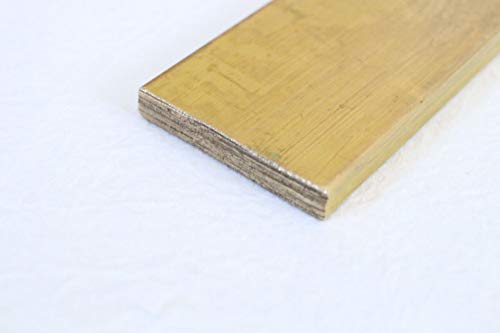
The method by which the bars were cut—whether sheared, saw-cut, or slit—impacts the edge quality. High-quality brass bars should feature clean, burr-free edges. If you are purchasing bars for aesthetic purposes, such as jewelry making or high-end cabinetry, avoid bars with irregular 'feathered' edges, as these will require extensive grinding and sanding to correct. Always verify the cross-sectional consistency. A bar that tapers in thickness along its length will lead to uneven results during bending or milling operations.
Application-Specific Selection Logic
To make the final decision, match the alloy to the primary stressor:
- For Machining: Prioritize Free-Cutting alloys for speed and chip control.
- For Forming/Bending: Prioritize Soft or Annealed tempers to prevent stress fractures.
- For Decoration: Prioritize bright finishes and high-copper alloys for superior patina development.
- For Structural/Hardware: Prioritize Full-Hard tempers for rigidity and impact resistance.