#TOP1

Astrophotography is a discipline of patience, precision, and light management. When you are attempting to capture the faint, ethereal glow of a nebula or the sharp, cratered surface of the Moon, the quality of the light hitting your sensor is everything. Celestron has long been a cornerstone in the astronomical community, and their range of camera filters is designed to solve specific optical challenges inherent in deep-sky and planetary imaging. Whether you are looking to suppress light pollution, enhance contrast in solar imaging, or isolate specific wavelengths for narrowband photography, choosing the right filter is not just an accessory purchase—it is a fundamental component of your optical train.
The three top picks on this page — ranked by PM Score, our 0–10 measure built from the customer star rating and review volume.


Celestron – Telescope Moon Filter – Eyepiece Accessory – Reduces Moon Glare and Enhances Lunar Crater Details – Great for Full Moon Observing – Works...
| SELLER | SELLER SCORE | AMAZON FULFILLED | PRIME | FREE SHIPPING |
|---|---|---|---|---|
| Amazon.com | 9.68 | Yes | Yes | Yes |
You are peering through your telescope during a bright full moon, but the lunar surface is so blindingly white that you can barely distinguish the terrain. This Celestron Moon Filter solves that exact frustration by instantly cutting through the intense glare to reveal the subtle shadows of craters and ridges. It is a surprisingly versatile little tool. Beyond lunar observation, I found it works wonders for dimming the brightness of certain planets or even managing light reflections when viewing snowy landscapes through a terrestrial scope. Installation is a breeze since it threads onto almost any 1.25" eyepiece in just a few seconds. For a small investment, it transforms a washed-out white orb into a high-contrast, detailed celestial landscape.
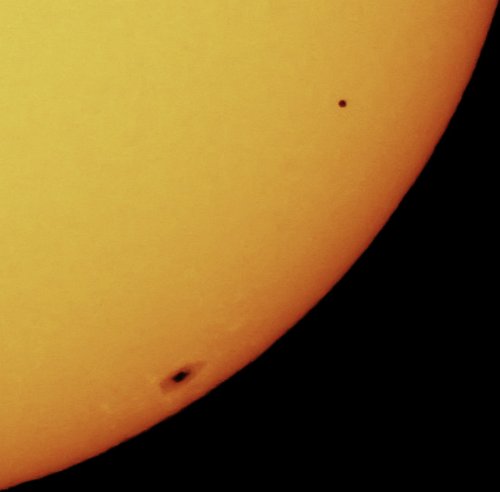


8"x8" Solar Filter Sheet for Telescopes, Binoculars and Cameras
| SELLER | SELLER SCORE | AMAZON FULFILLED | PRIME | FREE SHIPPING |
|---|---|---|---|---|
| Israeli First Aid & Shyh | 9.81 | Yes | Yes | Yes |
Most amateur astronomers settle for expensive, rigid factory-made solar filters that only fit one specific piece of gear, but this polymer sheet changes the game by offering total customization. I found that using this silver-black material allows you to craft a custom fit for any telescope, binocular, or camera setup at a fraction of the usual cost. The view is impressive, rendering the sun in a natural orange hue that makes observing sunspots and granulation a joy. Because Thousand Oaks Optical has been manufacturing these in Arizona for over 30 years, you can trust the substrate's durability. It's even stronger than standard Mylar. Just remember to always secure your DIY filter with plenty of sticky tape to ensure it stays firmly attached during your session.


Celestron – 2” Eyepiece and Filter Accessory Kit – 12 Piece Telescope Accessory Set – E-Lux Telescope Eyepiece – Barlow Lens – Colored Filters – Diago...
| SELLER | SELLER SCORE | AMAZON FULFILLED | PRIME | FREE SHIPPING |
|---|---|---|---|---|
| Amazon.com | 9.68 | Yes | Yes | Yes |
Most amateur astronomers spend far too much time hunting for individual components rather than actually looking at the stars. This Celestron kit solves that headache by bundling everything necessary for a serious night of observation into one organized set. The three E-Lux eyepieces stand out immediately, offering a wide 56-degree apparent field of view that makes the sky feel much more immersive. I was particularly impressed by the inclusion of a 2x Barlow lens and a high-quality 90-degree mirror diagonal, which significantly elevate the magnification and viewing comfort. Even the specialized lunar and planetary filters, like the Kodak Wratten #12, are included to help sharpen your view of celestial bodies. Everything tucks neatly into a rugged aluminum case with custom foam, making it a professional-grade upgrade for any setup.

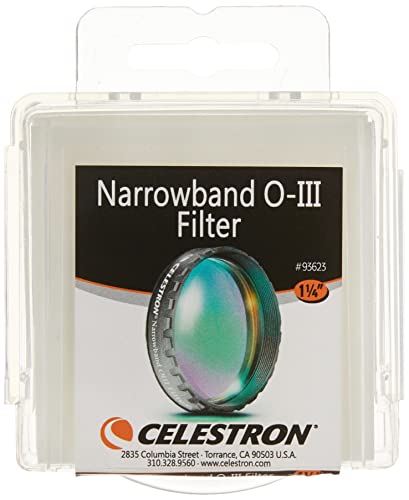

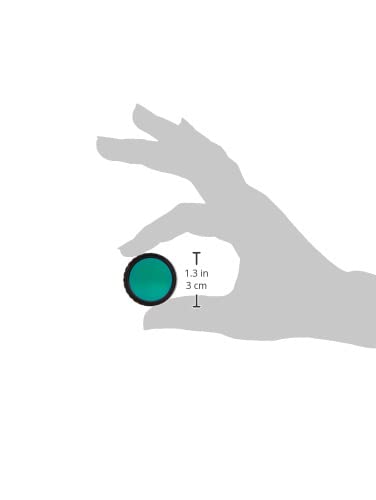
Celestron 93623 Narrowband Oxygen III 1.25 Filter
| SELLER | SELLER SCORE | AMAZON FULFILLED | PRIME | FREE SHIPPING |
|---|---|---|---|---|
| Amazon.com | 9.68 | Yes | Yes | Yes |
The Celestron Narrowband Oxygen III 1.25 Filter targets specific light signatures to transform your deep-sky imaging. By isolating the 496 and 501nm doubly-ionized oxygen lines, this filter effectively strips away the overwhelming background light spectrum that often ruins long-exposure shots. I found that focusing specifically on these emission lines makes a massive difference when you are hunting for the intricate details within planetary and emission nebulae. It acts as a precision gatekeeper for your sensor, ensuring that only the most relevant cosmic data reaches your camera. While it requires a bit of planning to match with your specific target, the ability to pull detail out of the darkness is a game-changer for astrophotography enthusiasts looking to sharpen their nebular captures.


Celestron 94123 1.25-Inch UHC/LPR Filter (Black), full-size
| SELLER | SELLER SCORE | AMAZON FULFILLED | PRIME | FREE SHIPPING |
|---|---|---|---|---|
| Amazon.com | 9.68 | Yes | Yes | Yes |
Staring through an eyepiece at a washed-out, hazy sky can be incredibly frustrating when you are trying to hunt for faint nebulae from a suburban backyard. This Celestron filter acts as a precision gatekeeper for your view, specifically targeting and suppressing the annoying wavelengths produced by artificial streetlights and neighborhood glow. By selectively reducing that light pollution, it allows the natural celestial objects to pop against a much darker, cleaner background. It is a vital tool for any amateur astronomer who doesn't have the luxury of traveling to a remote dark-sky site every time they want to observe. Instead of fighting against the orange tint of city lights, you get a much more focused and rewarding viewing experience.


Celestron 94119-10 1.25 " Eyepiece Filter Set
| SELLER | SELLER SCORE | AMAZON FULFILLED | PRIME | FREE SHIPPING |
|---|---|---|---|---|
| Amazon.com | 9.68 | Yes | Yes | Yes |
Lunar and planetary observers cannot afford to miss out on the clarity provided by this Celestron filter set. When you are staring through a telescope at a bright moon or a glowing Jupiter, the glare can quickly become overwhelming and wash out the fine details you are trying to see. This kit solves that problem using high-quality, solid plane parallel glass to reduce light scattering and sharpen your view. You get a versatile mix of colors, including Deep Yellow, Orange, and Blue, plus a Neutral Density filter for managing brightness. My favorite part is that these filters are stackable, allowing you to experiment with custom combinations to find that perfect, high-contrast view of the night sky.

SolarLite Solar Filter for Telescope, fits Celestron and Meade 8" Schmidt Cassegrain
| SELLER | SELLER SCORE | AMAZON FULFILLED | PRIME | FREE SHIPPING |
|---|---|---|---|---|
| Israeli First Aid & Shyh | 9.81 | Yes | Yes | Yes |
Most amateur astronomers settle for flimsy, unreliable solar films that leave them guessing about safety, but the SolarLite filter offers a professional-grade peace of mind. Instead of standard glass, Thousand Oaks Optical utilizes a specialized impregnated polymer that produces a stunning, natural yellow-orange view of the sun. Designed specifically to fit 8-inch Schmidt Cassegrain models from Celestron and Meade via a secure friction fit, this 236mm cap is built for longevity. The manufacturer claims this polymer is stronger than anything else on the market and remains safe for up to 15 years. Just remember to measure your instrument's outer diameter carefully before purchasing, and always use a bit of tape to ensure it is perfectly seated before you ever point your optics toward the sun.
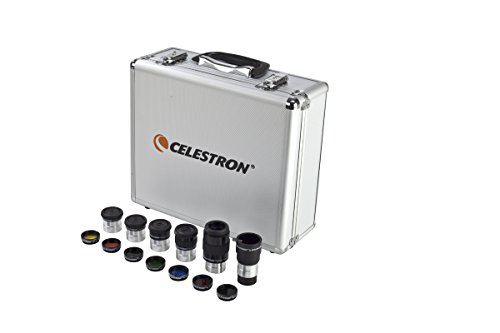


Celestron – 1.25” Eyepiece and Filter Accessory Kit – 14 Piece Telescope Accessory Set – Plossl Telescope Eyepiece – Barlow Lens – Colored Filters – M...
| SELLER | SELLER SCORE | AMAZON FULFILLED | PRIME | FREE SHIPPING |
|---|---|---|---|---|
| Amazon.com | 9.68 | Yes | Yes | Yes |
Amateur astronomers looking to upgrade from basic stock optics without breaking the bank need this Celestron kit immediately. I was impressed by how this single set transforms a standard telescope into a versatile observation station. The five Plössl eyepieces cover everything from wide-field scanning to high-power viewing, and the inclusion of a 2x Barlow lens effectively doubles your magnification options. It is essentially like having ten different eyepieces in one package. I also found the colored filters incredibly useful for bringing out specific details on Jupiter and Mars that otherwise look washed out. Everything arrives tucked into a rugged, foam-lined metal case that keeps your gear organized and protected during transport, with plenty of extra space to expand your collection later.

The first step in selecting a Celestron filter is identifying your primary target. Filters are categorized by the specific spectrum of light they allow to pass through. For urban astronomers, Light Pollution Reduction (LPR) filters are essential. These are engineered to target the specific wavelengths emitted by common street lighting, such as sodium vapor, allowing the natural light of celestial objects to remain visible. If you are venturing into deep-space imaging, you may encounter Narrowband filters. These are much more aggressive, blocking out almost all light except for specific chemical signatures like Hydrogen-alpha or Oxygen-III. This is critical for bringing out the structural details in nebulae that would otherwise be washed out by moonlight or city glow.
In astrophotography, every layer of glass added to your telescope or camera lens introduces the risk of light scattering or reflections. When evaluating Celestron options, look for filters that utilize high-quality, low-iron optical glass. Cheap filters can introduce a color cast or 'tint' that ruins the natural color balance of your long-exposure shots. High-end filters often feature multi-layer anti-reflective coatings. These coatings are vital because they ensure that light passing through the filter is transmitted efficiently to the sensor rather than bouncing between the filter and your camera lens, which causes 'ghosting' or internal flare.
One of the most common mistakes in purchasing filters is overlooking the mounting format. Celestron produces filters for various setups, ranging from standard screw-in threads for consumer cameras to specialized slots for dedicated astronomy cameras. You must match the thread diameter (expressed in millimeters) to your existing equipment. Furthermore, consider whether you need a Filter Wheel compatible filter. If you plan on doing multi-spectral imaging where you switch between different colors, you will need filters that are thin enough to fit within a motorized filter wheel without causing mechanical interference.
If you are a beginner, your decision logic should follow the environment you shoot in. If you live in a suburb or city, your priority is an LPR filter to combat the orange glow of the sky. If you have access to a dark-sky site, you might skip the light pollution filters and instead invest in a Moon and Planet filter, which can help enhance the contrast of lunar features by filtering out specific wavelengths of light that cause atmospheric haze.
For advanced users, the logic shifts toward specialized narrowband imaging. Here, the decision is based on the specific nebula you wish to capture. For example, if you are targeting the Orion Nebula, a filter optimized for Hydrogen-alpha will yield much more dramatic results than a generic wide-band filter. Always weigh the cost of the filter against the complexity of your setup. Specialized filters often require more precise calibration and post-processing software to correct the color shifts they intentionally introduce.
Quick answers about Celestron Camera Filters before you buy.
Share of top-ranked products by brand, from our rankings.
We compared Celestron Camera Filters products using product details and customer ratings to identify the best options in the categories..
From that comparison we shortlisted the top 8 Celestron Camera Filters for this page..
We aim to help you find the right filters products for your needs and save you time when choosing which Celestron Camera Filters to buy.
Compare the top 8 picks at a glance — select a column to sort.


