Understanding Alloy Composition: Bronze vs. Brass
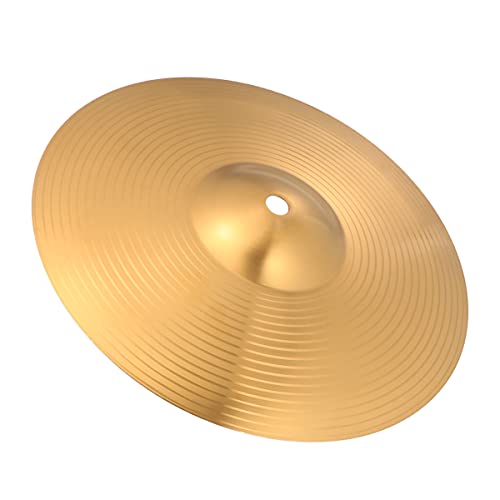
The most critical factor in cymbal quality is the metal used. Most entry-level or generic cymbals fall into two categories: brass and bronze. Brass cymbals are significantly cheaper to manufacture and are often characterized by a bright, somewhat 'clanky' sound with very little sustain. They are excellent for beginners who are just learning to control their stick technique, but they lack the musical complexity required for diverse genres.
If your budget allows, look for B8 bronze (8% tin, 92% copper) or B20 bronze (20% tin, 80% copper). B8 bronze is the sweet spot for budget performers. It offers a much more resonant, musical tone than brass and can handle heavier playing styles without cracking immediately. B20 is the industry standard for professional gear, but in the generic market, you will mostly find B8 or high-quality brass. Always check the product description for the specific alloy to ensure you aren't buying a 'bronze-colored' brass cymbal.
The Importance of Weight and Thickness
Weight dictates how a cymbal reacts to your playing. Heavy cymbals tend to be more durable and produce a loud, cutting sound with fewer overtones, making them ideal for rock or metal. However, they can feel 'stiff' to a lighter player. Light cymbals are more responsive and offer a washier, more complex sound, but they are much more prone to cracking under heavy use. When shopping for generic sets, try to match the weight to your playing style. If you are a heavy hitter, avoid the thinnest crash cymbals in a budget set, as they may not survive a few months of intense practice.
Defining Your Kit: The Essential Trio
When building a generic set, you shouldn't just buy a random assortment. You need to consider the functional roles of the three primary components:
- Hi-Hats: These need to be crisp and capable of providing a clear 'chick' sound when closed. Look for a pair that isn't too 'washy' so you can maintain rhythmic precision.
- Ride Cymbals: A good budget ride should have a distinct 'ping' sound. If the cymbal sounds like a muddy wash of noise when you hit the bell, it will be difficult to play time-keeping patterns.
- Crash Cymbals: These are meant for accents. Look for a crash that has a quick decay. If the sound lingers too long, it will clutter your drum mix.
Evaluating Tonal Consistency
One risk with generic brands is inconsistency. Because these are often produced in large batches with less individual quality control, one cymbal in a set might sound bright while another sounds dull. If possible, look for reviews that mention 'tonal balance.' A well-made budget set should feel like a cohesive family of instruments rather than a collection of mismatched metals. Aim for a set where the crashes and rides share a similar brightness or warmth, allowing your kit to sound unified during a performance.