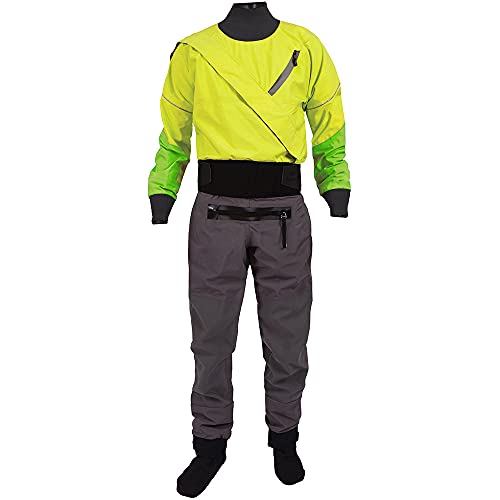
Understanding Material Composition and Durability
The primary differentiator in drysuit performance is the fabric. When evaluating Mookta options, you will encounter varying weights of trilaminate and neoprene. Trilaminate suits are favored by divers who prioritize mobility and a streamlined profile. They are lightweight and do not compress at depth, which maintains consistent buoyancy control. However, they require a sophisticated layering system underneath to provide warmth. Conversely, neoprene drysuits offer built-in thermal insulation, making them ideal for colder, shallower waters where the bulk of the material is less of a hindrance to movement. Consider your primary diving environment: if you are frequently transitioning between different water temperatures, a trilaminate suit offers the most versatility through adjustable undersuits.
Seal Integrity and Entry Systems
The most common failure points in any drysuit are the seals. Mookta designs typically utilize latex or silicone seals at the neck and wrists to prevent water ingress. Latex is the industry standard for its superior stretch and ability to create an airtight vacuum against the skin, but it requires careful maintenance to prevent cracking. When choosing a suit, pay close attention to the seal diameter. A seal that is too tight will cause chafing, while one that is too loose will allow cold water to seep in. Furthermore, consider the entry system. Front-entry zippers are generally more affordable and easier to don, but rear-entry zippers (often via a stabilizer) provide a much more streamlined silhouette and easier access to the torso area, which can be a game-changer for divers with larger builds or those seeking a professional fit.
Buoyancy Control and Fitment
A drysuit changes your displacement significantly. A poorly fitted suit can lead to 'ballooning,' where air pockets form in the legs or torso, making it incredibly difficult to maintain trim. When selecting your Mookta suit, look for anatomical shaping—specifically articulated knees and elbows. This reduces the amount of excess fabric that bunches up, which in turn minimizes uncontrolled buoyancy shifts. The fit should be snug enough to prevent large air pockets but loose enough to allow for a thick thermal undersuit. Always perform a 'dry fit' with your intended thermal layers before finalizing your decision, as the volume of your base layers will fundamentally change how the suit performs underwater.
Valve Placement and Hardware Reliability
The inflation and deflation valves are your lifeline for managing buoyancy within the suit. High-quality Mookta models feature robust, corrosion-resistant valves that are easy to manipulate even while wearing thick gloves. Look for adjustable vent valves that allow you to dump air from the shoulders efficiently. This is crucial when ascending to prevent an uncontrolled rise caused by expanding air inside the suit. Ensure the hardware feels substantial and that the movement is smooth. A sticking valve in a high-pressure environment is a safety risk you cannot afford to take.