Understanding the Core Function: Compensation vs. Isolation
The first decision you must make is whether your primary goal is axial, angular, or lateral compensation. Axial compensation refers to the coupling's ability to handle movement along the centerline of the pipe, which is critical during thermal expansion. Angular compensation allows for slight deviations in the alignment of two connected shafts or pipes, preventing stress on bearings and seals. Lateral compensation addresses side-to-side movement. Some fittings are designed to handle all three, while others are specialized for a single type of movement. If you are working with high-vibration motors, you need isolation to prevent that energy from traveling through the piping. If you are working with long runs of pipe subject to temperature swings, you need axial compensation to prevent buckling.
Material Compatibility and Chemical Resistance
Because flexible couplings often feature a combination of metallic housings and elastomeric (rubber or polymer) inserts, material selection is paramount. You cannot select a coupling based solely on the pipe material. You must consider the medium passing through the fitting. If you are transporting corrosive chemicals, a standard EPDM rubber insert might degrade rapidly, necessitating a Viton or PTFE-lined coupling. For high-temperature steam applications, reinforced silicone or specialized fluoropolymers are required to prevent the coupling from becoming brittle or melting. Furthermore, consider the environment surrounding the coupling. If the fitting is exposed to oils or UV radiation, ensure the outer sleeve is rated for those specific environmental stressors to prevent cracking.
Pressure Ratings and Temperature Extremes
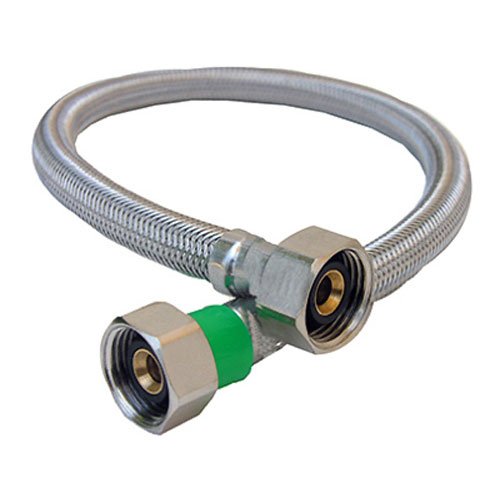
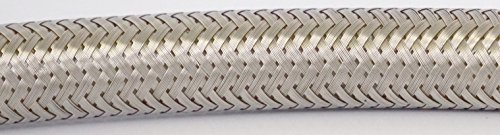
A common mistake in selecting fittings is ignoring the relationship between temperature and pressure. As temperature increases, the effective pressure rating of most flexible materials decreases. A coupling rated for 150 PSI at room temperature may only be safe for 50 PSI at its maximum operating temperature. Always consult the pressure-temperature charts provided by manufacturers. Additionally, look for the construction method of the reinforcement. For high-pressure industrial applications, couplings reinforced with braided stainless steel or heavy-duty fabric layers offer much higher safety margins than simple molded rubber sleeves.
Installation Constraints and Connection Types
How the coupling attaches to your existing system is just as important as the coupling itself. Common connection methods include flange connections, which are robust and standard for large-diameter industrial piping, and compression or barbed fittings, which are more common in smaller-scale fluid transfer. If your system requires frequent maintenance or disassembly, look for quick-release or clamp-style couplings. If the system is a permanent, high-pressure installation, flanged connections provide the most reliable, leak-proof seal. Finally, consider the 'insertion depth' or the space required for the fitting. In tight mechanical rooms, a compact, low-profile coupling may be the only viable option despite slightly lower flexibility ratings.