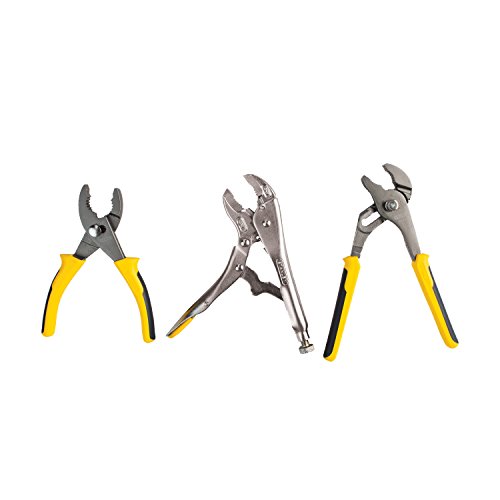
Understanding Jaw Geometry and Profiles
The most critical decision you will make is choosing the shape of the jaws. Not all locking pliers are created equal, and using a round-nose pair for a hexagonal bolt is a recipe for stripped hardware.
- Standard Curved Jaw: These are the versatile workhorses. The curved profile allows the tool to wrap around cylindrical objects like pipes or bolts, distributing pressure more evenly than flat jaws.
- Long-Nose (Needle-Nose): Essential for tight spaces where standard pliers cannot reach. These are ideal for gripping small wires or holding tiny components in place during soldering or assembly.
- Straight Jaw: Often used for flat surfaces or when you need to apply pressure to a specific plane. They are excellent for clamping thin metal sheets or working with flat-sided fasteners.
- Specialty Profiles: You may encounter specialized versions designed specifically for water pump pliers or heavy-duty pipe gripping, which feature serrations optimized for high-torque applications.
Clamping Force and Adjustment Mechanics
The defining feature of locking pliers is the ability to maintain a constant pressure without manual squeezing. This is controlled by the adjustment screw located at the end of the handle. When evaluating a pair, pay close attention to the 'throw' or the range of the adjustment. A tool with a wide adjustment range is more versatile, allowing you to transition from small nuts to large pipes without switching tools. However, there is often a trade-off: tools with extreme adjustment ranges may have slightly less structural rigidity at the pivot point. Look for a high-quality tension screw that allows for fine-tuning. You want a tool that locks with a satisfying 'click' and stays seated even under significant vibration or lateral stress.
Build Quality and Material Durability
Because locking pliers are often used in high-torque or high-impact scenarios, the metallurgy matters. Cheaply made tools often use soft steel that will deform under pressure, leading to 'jaw spreading' where the tool fails to maintain its grip. Seek out tools forged from high-carbon steel or chrome vanadium steel. These materials offer the hardness required to maintain sharp serrations—the teeth that actually do the gripping. Furthermore, look for a corrosion-resistant finish. Whether it is a polished chrome plating or a matte phosphate coating, a quality finish prevents rust, especially if you are working in damp environments like automotive repair or plumbing.
Ergonomics and Handle Design
If you are using these tools for extended periods, hand fatigue is a real concern. High-quality locking pliers feature ergonomic, dipped, or bi-material handles. These coatings provide two benefits: they offer a non-slip grip even when your hands are oily, and they provide a layer of vibration dampening. Additionally, consider the size of the tool relative to your hand. A tool that is too large will make it difficult to actuate the release lever, while one that is too small may lack the necessary leverage for heavy-duty tasks. Always test the ease of the release mechanism. You should be able to disengage the lock with a single thumb press without needing excessive force.