Scale Consistency and Visual Proportions
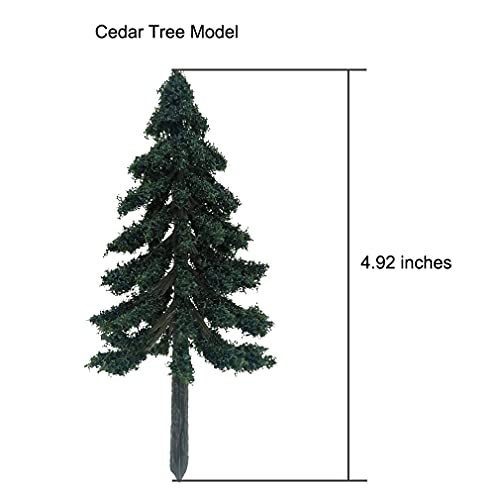
The most critical factor when selecting scenery is scale accuracy. Model railroading operates on strict ratios—such as HO, N, or O scale—and even a slight deviation in the size of a miniature tree, a roadside building, or a piece of ballast can shatter the illusion of realism. When browsing scenery kits, always verify that the dimensions of the static elements align with your specific track gauge and locomotive size. A landscape that features oversized foliage or undersized street furniture will create a 'toy-like' appearance rather than a realistic miniature environment. Look for accessories that are specifically designed for your chosen scale to ensure that shadows, textures, and heights feel natural to the eye.
Texture and Material Realism
A great layout relies on varied textures to mimic the complexity of the real world. Avoid scenery that relies heavily on uniform, monochromatic plastics. Instead, look for products that offer multi-tonal colors and organic textures. For ground cover, seek out materials that provide a mix of fine powders, tufts, and larger clumping agents to simulate diverse vegetation. For geological features like rocks or embankments, high-quality scenery pieces should feature realistic crags, crevices, and color gradients that mimic natural stone or earth. The goal is to avoid 'flatness'. Layering different textures—such as fine grit for paths and thicker moss-like materials for forests—adds the three-dimensional depth necessary for high-end modeling.
Ease of Application and Durability
Scenery is rarely a 'set it and forget it' endeavor. It often requires application via adhesives or specialized tools. Consider the complexity of the installation process before purchasing. Some scenery elements come pre-mounted on bases, which is excellent for beginners or those building rapid dioramas, while others are loose materials intended for custom application. If you are working with static grass or fine flocking, ensure the materials are of a quality that holds its shape once dried and does not shed excessively during operation. Durability is also key. Since model trains create micro-vibrations as they pass, your scenery must be securely bonded to the layout to prevent shifting or 'dusting' over time.
Thematic Cohesion and Modular Design
A common mistake in layout building is purchasing disconnected scenery pieces that don't tell a story. Before buying, decide on a theme: is your layout a rugged mountain pass, a suburban neighborhood, or a heavy industrial zone? Your scenery should reflect this. A mountain scene requires rock formations, pine trees, and perhaps some weathered timber, whereas an industrial scene needs gravel, warehouses, and perhaps some rusted metal accents. Choosing modular scenery components allows you to expand your layout incrementally, ensuring that as you add new sections, the aesthetic remains consistent across the entire board. This thematic approach ensures that your layout feels like a single, unified world rather than a collection of random miniature objects.