#TOP1

Investing in ecology and nature conservation products is a commitment to planetary stewardship. Unlike standard consumer goods, products in this category—ranging from biodiversity monitoring tools and soil health kits to reforestation supplies and wildlife habitat enhancers—are judged by their scientific accuracy, their impact on local ecosystems, and their long-term sustainability. Whether you are a professional researcher, a community land manager, or a dedicated citizen scientist, selecting the right tools is critical to ensuring that your conservation efforts yield measurable, positive results rather than unintended environmental consequences.
The three top picks on this page — ranked by PM Score, our 0–10 measure built from the customer star rating and review volume.


Nature's Best Hope: A New Approach to Conservation That Starts in Your Yard
| SELLER | SELLER SCORE | AMAZON FULFILLED | PRIME | FREE SHIPPING |
|---|---|---|---|---|
| Amazon.com | 9.68 | Yes | Yes | Yes |
You are standing in your backyard, staring at a patch of grass, wondering if your small slice of land actually makes a difference in the global fight against habitat loss. Nature's Best Hope shifts your perspective from feeling helpless to feeling empowered by showing you how local action creates massive ecological ripples. This Timber Press publication moves beyond simple gardening tips to offer a profound new approach to conservation that begins right at your doorstep. It is a refreshing read for anyone who wants to turn their private outdoor space into a functional sanctuary for local wildlife. Instead of feeling overwhelmed by large-scale environmental crises, you walk away with a practical roadmap for making your own garden a vital part of a larger biological network.

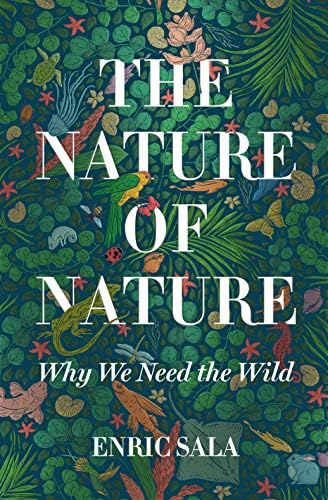
The Nature of Nature: Why We Need the Wild
| SELLER | SELLER SCORE | AMAZON FULFILLED | PRIME | FREE SHIPPING |
|---|---|---|---|---|
| GLOBALIXIR | 9.93 | Yes | Yes | Yes |
You might wonder if another book on environmentalism can actually offer something fresh in a crowded market, but National Geographic manages to turn that skepticism on its head. The Nature of Nature: Why We Need the Wild isn't just a collection of facts. It is a compelling argument for our fundamental connection to the natural world. I found the writing to be incredibly immersive, moving beyond simple observation to explain the deep-seated necessity of wilderness in our lives. It avoids the trap of being overly academic, instead opting for a narrative style that feels personal and urgent. For anyone looking to reconnect with the outdoors or understand the ecological stakes of our era, this read is an essential addition to your bookshelf.

Conservation Science: Balancing the Needs of People and Nature
| SELLER | SELLER SCORE | AMAZON FULFILLED | PRIME | FREE SHIPPING |
|---|---|---|---|---|
| Follow Books | 9.89 | No | No | No |
After weeks of deep diving into environmental studies, I realized how much this text shifts your perspective on ecological management. Conservation Science: Balancing the Needs of People and Nature serves as a rigorous academic pillar for anyone trying to navigate the messy intersection of human development and wildlife preservation. It doesn't just present theories. It tackles the actual friction that occurs when social needs clash with biological imperatives. While the price point reflects its specialized nature, the depth of insight provided by W. H. Freeman makes it an essential resource for serious students and professionals. It is a heavy lift intellectually, but the clarity it brings to complex environmental dilemmas is worth the effort.

| SELLER | SELLER SCORE | AMAZON FULFILLED | PRIME | FREE SHIPPING |
|---|---|---|---|---|
| Amazon.com Services LLC | 0.00 | No | No | No |


| SELLER | SELLER SCORE | AMAZON FULFILLED | PRIME | FREE SHIPPING |
|---|---|---|---|---|
| Amazon.com | 9.68 | Yes | Yes | Yes |

| SELLER | SELLER SCORE | AMAZON FULFILLED | PRIME | FREE SHIPPING |
|---|---|---|---|---|
| Amazon.com | 9.68 | Yes | Yes | Yes |


| SELLER | SELLER SCORE | AMAZON FULFILLED | PRIME | FREE SHIPPING |
|---|---|---|---|---|
| AZONA STORE | 5.15 | Yes | Yes | Yes |

| SELLER | SELLER SCORE | AMAZON FULFILLED | PRIME | FREE SHIPPING |
|---|---|---|---|---|
| Amazon.com | 9.68 | Yes | Yes | Yes |


| SELLER | SELLER SCORE | AMAZON FULFILLED | PRIME | FREE SHIPPING |
|---|---|---|---|---|
| RAREWAVES-IMPORTS | 9.94 | No | No | No |
| SELLER | SELLER SCORE | AMAZON FULFILLED | PRIME | FREE SHIPPING |
|---|---|---|---|---|
| HarperCollins Publishers | 0.00 | No | No | No |

| SELLER | SELLER SCORE | AMAZON FULFILLED | PRIME | FREE SHIPPING |
|---|---|---|---|---|
| Amazon.com | 9.68 | Yes | Yes | Yes |
| SELLER | SELLER SCORE | AMAZON FULFILLED | PRIME | FREE SHIPPING |
|---|---|---|---|---|
| Amazon.com | 9.68 | Yes | Yes | Yes |

| SELLER | SELLER SCORE | AMAZON FULFILLED | PRIME | FREE SHIPPING |
|---|---|---|---|---|
| Amazon.com | 9.68 | Yes | Yes | Yes |


| SELLER | SELLER SCORE | AMAZON FULFILLED | PRIME | FREE SHIPPING |
|---|---|---|---|---|
| Amazon.com | 9.68 | Yes | Yes | Yes |

Decolonize Conservation: Global Voices for Indigenous Self-Determination, Land, and a World in Common
| SELLER | SELLER SCORE | AMAZON FULFILLED | PRIME | FREE SHIPPING |
|---|---|---|---|---|
| Amazon.com | 9.68 | Yes | Yes | Yes |
Traditional environmentalism often overlooks the very people who have successfully managed the earth's ecosystems for millennia. Decolonize Conservation addresses this systemic gap by centering Indigenous perspectives on land rights and self-determination. Rather than treating conservation as a top-down mandate, this book explores how global voices can reshape our relationship with the natural world through a shared, common lens. It is a vital read for anyone looking to move beyond outdated colonial frameworks in ecology and social justice. I found the focus on interconnectedness particularly striking, as it moves the conversation from mere preservation to active, community-led stewardship. It is a challenging but necessary deep dive into how we can truly protect our planet by honoring those who know it best.

| SELLER | SELLER SCORE | AMAZON FULFILLED | PRIME | FREE SHIPPING |
|---|---|---|---|---|
| Amazon.com | 9.68 | Yes | Yes | Yes |

The first step in selecting ecology-focused products is identifying your specific niche. Conservation is not a monolith. The tools required for urban pollinator support are vastly different from those used for large-scale forest management or marine ecosystem restoration. If your goal is biodiversity monitoring, you should prioritize high-fidelity sensors and data collection instruments. If you are focused on habitat restoration, your focus shifts to the genetic integrity of seeds, the chemical composition of soil amendments, and the structural suitability of nesting materials. Always align your purchase with the specific ecological problem you are attempting to solve to avoid wasting resources on mismatched technology or materials.
For tools involving monitoring—such as water quality testers, soil pH meters, or acoustic biodiversity recorders—accuracy is non-negotiable. In ecology, a slight margin of error can lead to incorrect conclusions about species decline or nutrient depletion. When evaluating monitoring equipment, look for calibration stability and sensor longevity. High-quality ecological tools should offer repeatable results under varying environmental stressors, such as extreme humidity, temperature fluctuations, or UV exposure. If the product provides digital data, ensure the software interface is compatible with standard ecological modeling formats to facilitate easier integration into larger scientific studies.
It is a fundamental irony to purchase conservation tools that contribute to environmental degradation. When selecting ecology products, apply the same scrutiny to the product's lifecycle as you do to its function. For habitat enhancement products, such as birdhouses, insect hotels, or riparian planting kits, prioritize biodegradable or recycled materials. Avoid plastics that leach microplastics into the soil or water systems you are trying to protect. For larger equipment, consider the 'repairability index'. A tool that can be serviced and maintained for a decade is infinitely more conservation-friendly than a disposable electronic device that becomes e-waste in three years.
Consider the scale of your project. A kit designed for a backyard garden will likely fail in a multi-acre reforestation project, just as heavy-duty industrial soil probes may be overkill and unnecessarily expensive for a small-scale community garden. Look for products that offer modularity—the ability to add more sensors, expand a planting area, or upgrade software capabilities as your conservation project grows. Furthermore, assess the 'barrier to entry' regarding technical skill. If a piece of monitoring equipment requires a PhD to interpret the raw data, it may hinder your ability to implement rapid, real-world conservation actions.
Quick answers about Nature Conservation before you buy.
Share of top-ranked products by brand, from our rankings.
We compared Nature Conservation products using product details and customer ratings to identify the best options in the categories. The top brands in this selection include and national geographic.
From that comparison we shortlisted the top 16 Nature Conservation for this page. The sellers featured here include and globalixir and amazon.com.
We aim to help you find the right ecology products for your needs and save you time when choosing which Nature Conservation to buy.
Compare the top 16 picks at a glance — select a column to sort.


