PickSmartly Buying Guide

Best Adnet Network Transceivers in 2026

5.1 PM Score
Products Compared
1
Brands Ranked
1
Our guides are compiled from product information and customer ratings. If you click on links we provide, we may receive compensation.

In the high-stakes world of enterprise networking and data center management, the physical layer is often the most overlooked component. However, network transceivers serve as the critical bridge between your high-speed switching hardware and the fiber optic or copper cabling that carries your data. Choosing the wrong transceiver can lead to intermittent signal loss, increased latency, or even complete link failure. A high-quality transceiver ensures that your bandwidth-intensive applications—from cloud computing to real-time video streaming—operate with maximum efficiency and minimal error rates. This guide is designed to help you navigate the technical complexities of selecting the right transceiver for your specific network architecture.

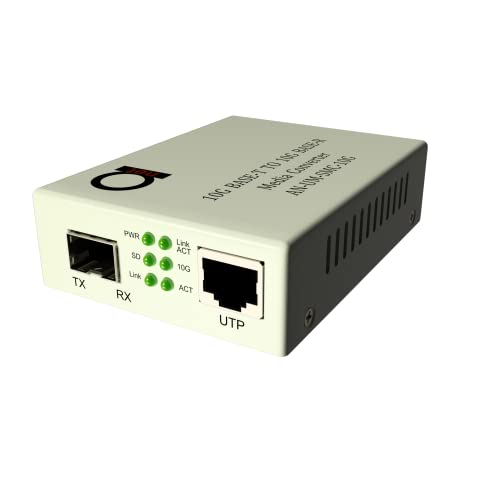
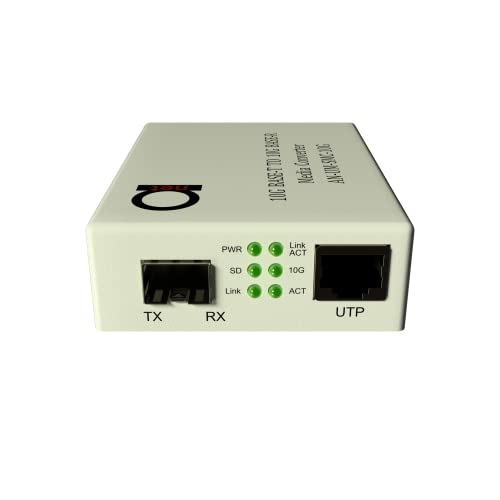
ADnet 10 Gigabit Fiber to 10G Copper UTP Ethernet Media Converter - Open SFP+ 10Gb Slot - 10G Base-T to 10G Base-R - Cat7 UTP 1m Cable in Set - 10 Gbp...

ADnet 10G SFP+ to 10G Copper Media Converter

ADNET AN-UM-SMC-10G 3.70 X 2.76 X 1.04 Inches

PM Score for ADNET (PM Score)

5.1 PM Score
Buy on Amazon
  • 10G Base-R (Open SFP+ 10G slot) to 10G Base-T UTP Copper RJ-45 port Fiber Media Converter.
  • Convert & Extend Copper Distance of Your High Speed 10gbps network connect far beyond – your SFP+ fiber transceiver distance is the only limit now.
  • Supports any SFP+ 10G transceiver of your choice, be it Single or Multimode, or even WDM single optical fiber type – it’s pure Open SFP+ slot.
  • Important!: 10G base-T RJ-45 UTP port will autoadapt (autosense) to 1000Base-T, 2.5G Base-T, 5G Base-T and 10G Base-T connection at user side, but fiber port – slot accepts only 10G SFP+ (10 Gigabit) SFP+ transceivers only.
  • You Get Free 1m (3.28 ft.) UTP Cat7 (10G Network Ready) UTP RJ-45 patchcord in set with every 10G Media Converter!
SELLER SELLER SCORE AMAZON FULFILLED PRIME FREE SHIPPING
AD-net 5.49 Yes Yes Yes

The heavy-duty build of this ADnet converter immediately signals it is designed for serious high-speed networking environments. Instead of being locked into a specific fiber type, you get a truly open SFP+ slot that accepts any 10G transceiver you already own, whether it is single-mode, multi-mode, or WDM. This flexibility is a lifesaver when you need to bridge the gap between long-distance fiber and your existing copper infrastructure. While the fiber side is strictly 10G, the 10G Base-T RJ-45 port is impressively smart, automatically sensing and adapting to 1000Base-T, 2.5G, 5G, or 10G connections on your end. It even throws in a high-quality 1m Cat7 patchcord to get your 10Gbps network up and running right out of the box.

What We Like
Open SFP+ slot
Autosensing copper port
Includes Cat7 cable
10Gbps high speed
Flexible transceiver support
Buying Guide

A Guide to Selecting the Best adnet network transceivers

A Guide to Selecting the Best adnet network transceivers

Understanding Form Factors and Standards

The first decision in your procurement process is selecting the correct form factor. The industry has evolved through several iterations, each offering different densities and speeds. SFP (Small Form-factor Pluggable) is the standard for Gigabit speeds, while SFP+ is the go-to for 10Gbps environments. If you are managing a high-density data center, you will likely look toward QSFP (Quad Small Form-factor Pluggable) or QSFP28, which support 40Gbps and 100Gbps respectively. Matching the form factor to your switch or router's available ports is non-negotiable. A mismatch will result in physical incompatibility regardless of the electrical specs.

Connector Types and Media Selection

Transceivers are categorized by the medium they use to transmit data: fiber optic or copper. For short-range connections within a single rack, Direct Attach Copper (DAC) cables are often the most cost-effective and energy-efficient choice. For medium distances, Multimode Fiber (MMF) using LC connectors is the industry standard. However, if you are bridging connections across a campus or between different buildings, you must opt for Singlemode Fiber (SMF) transceivers, which use laser technology to push data over much longer distances without significant signal degradation. Always verify that your transceiver's wavelength (e.g., 850nm for multimode or 1310nm/1550nm for singlemode) matches your existing fiber plant.

Speed, Reach, and Wavelength Compatibility

When evaluating technical specifications, do not just look at the maximum speed. Look at the 'reach.' A transceiver rated for 300 meters will not function if your cable run is 500 meters, even if the speed is correct. You must align the transceiver's optical power budget with the length of your cabling. Furthermore, pay close attention to the duplex vs. simplex requirements. Most modern high-speed networks utilize duplex fiber, requiring two strands of glass, but certain specialized WDM (Wavelength Division Multiplexing) transceivers can run over a single strand by using different wavelengths to transmit and receive simultaneously.

Compatibility and Coding Requirements

One of the most significant hurdles in transceiver procurement is vendor compatibility. Network hardware manufacturers often implement proprietary coding in their firmware to ensure that only their branded modules work in their switches. When sourcing third-party transceivers, it is vital to ensure they are 'coded' or 'programmed' to match your specific hardware ecosystem. A transceiver that is not properly coded may be rejected by the switch's operating system, leading to 'unsupported transceiver' errors that can disable the port entirely. Always confirm that the transceiver's EEPROM is programmed to communicate seamlessly with your specific brand of networking equipment.

Reliability and Thermal Management

In a 24/7 operational environment, heat is the enemy of signal integrity. High-speed transceivers, particularly those operating at 100G and above, generate significant thermal energy. Look for modules that feature robust Digital Optical Monitoring (DOM). DOM allows network administrators to monitor real-time parameters such as temperature, supply voltage, and laser bias current. This proactive data is essential for predictive maintenance, allowing you to replace a failing module before it causes a network outage. High-quality construction and efficient heat dissipation are the hallmarks of a transceiver built for enterprise-grade reliability.

Ready to choose?

Jump back to our ranked picks or compare the shortlist side by side.

Frequently Asked Questions

Quick answers about Adnet Network Transceivers before you buy.

A transceiver is an active optical or copper module that converts electrical signals from a switch into light or different electrical formats, whereas a cable is simply the medium that carries the signal between two points.

Yes. While many transceivers follow industry standards, many network switch manufacturers implement proprietary coding. It is crucial to ensure the transceiver is specifically coded for your hardware brand to avoid 'unsupported transceiver' errors.

Single-mode transceivers use lasers to send signals over long distances (kilometers) through thin fiber, while Multi-mode transceivers use LEDs or VCSELs for shorter distances (typically within a data center) using thicker fiber.

Hot-swappable means you can plug or unplug the transceiver module from the network switch while the device is powered on without needing to reboot the entire system.

SFP (Small Form-factor Pluggable) typically supports speeds up to 1 Gbps, whereas SFP+ is an enhanced version designed to support speeds of 10 Gbps using the same physical footprint.

Generally, no. While the physical shape is identical, the electrical signaling and clock speeds are different. Always check your switch's specification sheet to see if the port supports multi-rate functionality.

Digital Optical Monitoring (DOM) or Digital Diagnostic Monitoring (DDM) allows the switch to monitor real-time parameters like temperature, laser bias current, and optical receive power, which is essential for proactive troubleshooting.

The wavelength (measured in nanometers, e.g., 850nm or 1310nm) must match both the transceiver and the fiber optic cable type being used to ensure signal integrity.
Rankings & Insights

Our Adnet Network Transceivers Rankings

1 Products Compared
5.1 Avg PM Score
1 Brands Ranked

Top 10 Adnet Network Transceivers Brands on Amazon

Share of top-ranked products by brand, from our rankings.

  1. 01 Adnet 1 (100%)

How We Selected These Products

We compared Adnet Network Transceivers products using product details and customer ratings to identify the best options in the categories..

From that comparison we shortlisted the top 1 Adnet Network Transceivers for this page..

We aim to help you find the right transceivers products for your needs and save you time when choosing which Adnet Network Transceivers to buy.

Side by Side

Comparison Table

Compare the top 1 picks at a glance — select a column to sort.

# Product Brand PM Score Where to Buy
1 ADnet 10G SFP+ to 10G Copper Media Converter ADnet 5.1 Buy on Amazon