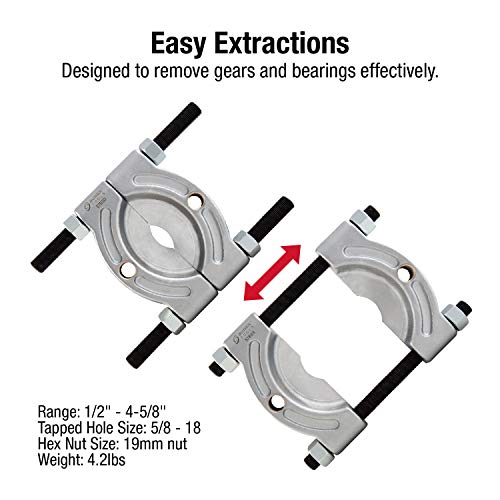
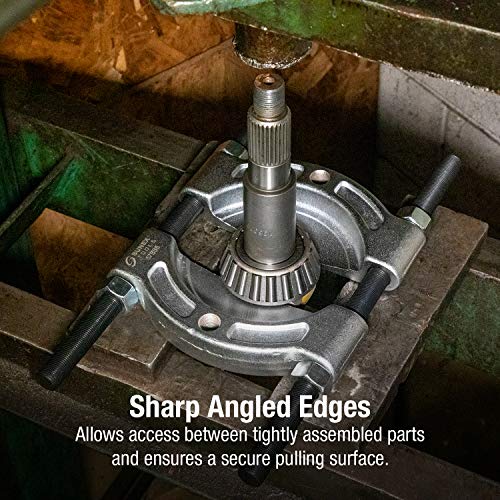
Understanding Puller Types and Applications
The first step in selecting a Sunex puller is identifying the specific task at hand. Not all extractions are created equal. Gear pullers are designed for heavy-duty applications where you need to grip the outer diameter of a component to slide it off a shaft. These are essential for transmission work and heavy engine components. On the other hand, bearing pullers are often more specialized, designed to reach into tight housings or to grip the inner race of a bearing to prevent damage to the outer ring. If you are working on steering components or small engine assemblies, you might look toward clutch or hub pullers. Choosing the wrong type can lead to 'cocking' the tool, which applies uneven pressure and can permanently damage the shaft or the component you are trying to save.
Capacity and Force Distribution
One of the most critical decision factors is the rated capacity of the tool. Pullers are categorized by how much force they can exert, typically measured in tons or by the thickness and strength of the crossbar and jaws. When selecting a tool, always err on the side of higher capacity than you think you need. A puller operating at its absolute limit will experience more flex in the arms, which can lead to the jaws slipping off the workpiece. Look for Sunex models that feature heavy-duty forged steel construction. The quality of the center bolt is also paramount. A high-quality, hardened bolt ensures that the pulling force is converted into linear motion without the threads stripping under extreme tension.
Jaw Configuration and Reach
ext>
The geometry of the jaws is what determines how effectively a tool can engage with a part. You will encounter two main styles: two-jaw and three-jaw configurations. Three-jaw pullers are generally superior for most applications because they distribute the pulling force more evenly around the circumference of the object, reducing the risk of tilting. However, two-jaw pullers are indispensable when working in cramped engine bays where there isn't enough clearance for a third arm. Additionally, consider the 'reach' or the length of the arms. A puller with long, slender arms is better for deep-seated components, while shorter, beefier arms are better for high-torque, shallow extractions.
Material Integrity and Durability
Because pullers are subject to immense compressive and tensile stresses, the metallurgy of the tool is non-negotiable. Sunex tools are known for using high-grade alloy steels, but you should specifically look for tools with heat-treated components. Heat treatment ensures that the jaws remain hard enough to bite into metal without deforming, while the body of the tool retains enough toughness to resist snapping. Avoid tools that feel lightweight or utilize thin-walled tubing for the arms, as these will inevitably bow when you apply the necessary pressure with a breaker bar or a wrench.
Recommendation Logic
To make the final decision, follow this logic: Start with the component you need to remove. Determine its diameter and whether you have access to the inner or outer race. If the space is open, prioritize a three-jaw puller for stability. If the space is tight, select a two-jaw model. Once the type is decided, check the estimated resistance of the part. If it is a seized part, opt for the highest tonnage capacity available in that size class to ensure you have the overhead required to break the component free safely.