Understanding Actuation Types: Momentary vs. Maintained
The most critical decision you will make is determining the switch's behavior after you release your finger. Momentary switches are designed to return to their original state immediately upon release. These are ideal for signaling, resetting functions, or applications like a doorbell or a horn, where the action should only occur while the button is actively pressed. Maintained switches (often called latching switches), on the other hand, stay in their new position after being pressed. You must press them a second time to return them to the starting state. Choosing the wrong type can lead to significant logic errors in your circuitry or a fundamental misunderstanding of how your hardware operates.
A switch is only as good as its ability to handle the current flowing through it. You must match the switch's electrical rating—measured in Amperes (A) and Volts (V)—to your specific load. Using a switch rated for low-voltage signal processing in a high-current power circuit will cause the contacts to weld shut or melt the housing. Additionally, pay close attention to the contact configuration: SPST (Single Pole Single Throw), SPDT (Single Pole Double Throw), or DPDT (Double Pole Double Throw). An SPST switch is a simple on/off gate, whereas an SPDT switch allows you to toggle a signal between two different paths. If your project requires controlling two separate circuits simultaneously with one press, you will need a double-pole configuration.
Tactile Feedback and Actuation Force
In high-end builds, the 'feel' of the switch is paramount. The actuation force refers to how much pressure is required to trigger the switch. A light actuation force is great for rapid-fire inputs, but it can lead to accidental triggers if the device is moved or bumped. A heavy actuation force provides a sense of security and intentionality, which is preferred in industrial or high-stakes environments. Furthermore, consider the tactile feedback—the 'click' sensation. Some switches offer a crisp, audible snap that confirms the circuit has closed, while others provide a smooth, silent press. This distinction is vital for user experience and error prevention.
Environmental Sealing and Durability
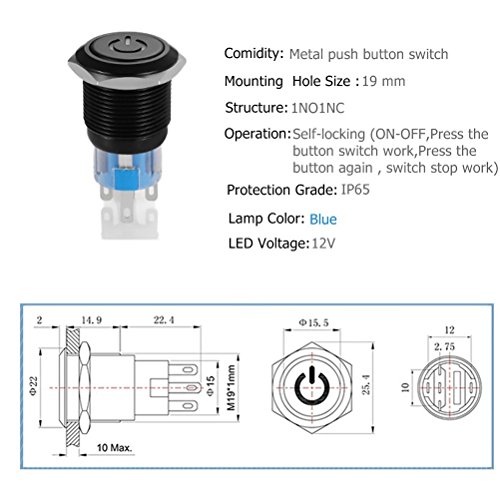
Where will your switch live? If the switch is intended for an outdoor enclosure, a workshop, or a marine environment, you must look for an Ingress Protection (IP) rating. An IP65 or higher rating ensures that the switch is protected against dust and water splashes. For indoor, controlled environments, standard plastic or metal housings are sufficient. Material choice also dictates longevity. Metal housings offer superior durability and a premium feel, whereas high-quality polymers are better suited for applications requiring electrical insulation or lightweight designs. Always consider the mechanical life cycle—the number of actuations a switch can withstand before failure—to ensure it meets the demands of your specific use case.