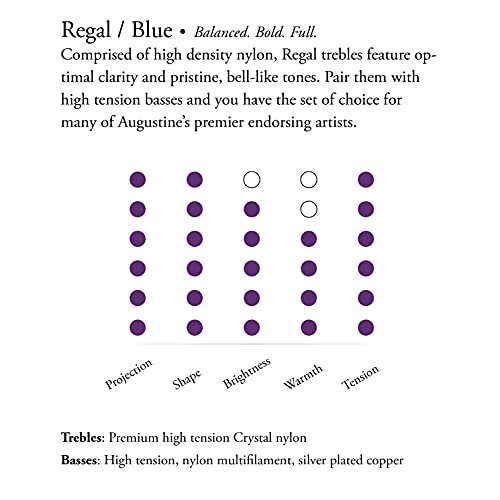
Understanding Core Materials and Tension
The foundation of any Augustine string set lies in the core. When browsing this category, you must decide between steel cores and synthetic/gut-style alternatives. Steel cores are the industry standard for stability and projection, making them ideal for orchestral players who need to cut through a thick texture of brass and woodwinds. However, Augustine is renowned for providing strings that mimic the warmth of traditional gut. If your goal is a soloistic, lyrical sound with a rich harmonic profile, look for sets that emphasize a softer, more organic attack. Pay close attention to the tension levels specified. A high-tension set will offer more clarity and volume but may require more physical effort, whereas a lower-tension set provides a more supple feel under the fingers, which is beneficial for complex melodic passages.
Winding Density and Tonal Color
The outer winding of the string—typically silver, tungsten, or chrome—dictates the 'color' of your sound. A heavy winding often results in a darker, more fundamental-heavy tone, which is excellent for providing a solid foundation in a jazz ensemble or a symphonic section. Conversely, lighter windings or specific alloy compositions can brighten the sound, adding 'zing' and definition to the upper register. When selecting your strings, consider your instrument's natural tendency. If your bass is naturally bright or 'nasal,' opt for a denser, more traditional winding to mellow the tone. If your instrument is overly dark or muffled, a more modern, articulated winding can help bring out the clarity of your notes.
The Role of Playability and Response
A string that sounds beautiful in a showroom but feels like a brick under your fingers is a poor investment. One of the key decision factors with Augustine strings is the 'response time'—how quickly the string vibrates after the initial contact of the bow or finger. For pizzicato-heavy players, such as those in jazz or contemporary music, you want a string that responds instantly without excessive 'slap' or unwanted overtones. For bowed players, the focus shifts to the smoothness of the transition between notes. Look for sets that promise a consistent tactile feel across all four strings, ensuring that your shifts in position are seamless and your intonation remains stable.
Matching Strings to Your Musical Environment
Finally, your decision should be guided by your primary musical setting. An orchestral player performing in a large concert hall needs strings with massive projection and high durability to withstand rigorous rehearsal schedules. A chamber musician playing in intimate settings may prioritize a nuanced, delicate touch that allows for subtle dynamic shading. By evaluating the interplay between core material, winding, and tension, you can select an Augustine set that doesn't just sit on your fingerboard, but truly integrates with the wood of your instrument to create a cohesive, professional sound.