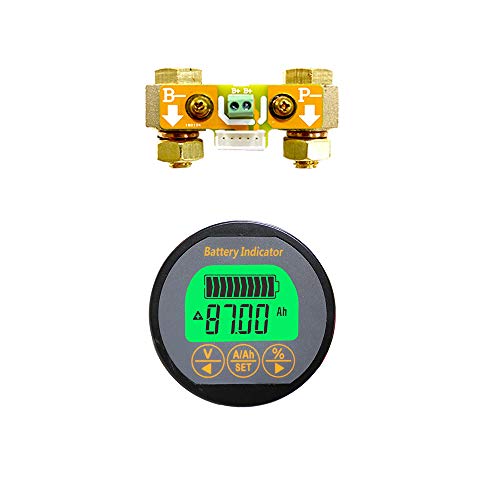
Understanding Measurement Precision and Resolution
The most fundamental factor in selecting a tester is its ability to provide accurate, repeatable data. When evaluating a device, look closely at the decimal precision offered for your primary measurement types. For instance, if you are working with low-voltage microcontrollers, a tester that provides millivolt-level granularity is far more valuable than one that rounds to the nearest tenth of a volt. High-resolution testers minimize the 'noise' in your readings, allowing you to distinguish between a legitimate signal fluctuation and a simple measurement error. Always check the accuracy specifications in the technical documentation to ensure the tolerance levels meet the requirements of your specific project.
Interface and Connectivity Options
Modern testing is rarely an isolated event. It is almost always part of a larger data-logging or simulation ecosystem. A high-quality tester should offer versatile connectivity. Look for devices that feature high-speed data transfer protocols, allowing you to export logs directly to a workstation for deep-dive analysis. If your workflow involves real-time monitoring, prioritize testers with responsive, low-latency displays or those that offer seamless integration with computer-based software. The ability to bridge the gap between physical hardware and digital analysis software can significantly reduce the time spent on troubleshooting and debugging.
Environmental Durability and Build Quality
Testers are frequently used in environments that are far from pristine. Whether you are working in a cleanroom laboratory or a cluttered workshop, the physical resilience of the device is paramount. Pay attention to the casing material and the quality of the input probes. Probes with high-grade insulation and ergonomic grips prevent user fatigue and reduce the risk of accidental short circuits during delicate operations. Furthermore, consider the battery life or power management system. A tester that fails mid-sequence due to a depleted power source can lead to incomplete data sets and wasted time.
Feature Set vs. Complexity
It is easy to be swayed by a device that boasts a long list of features, but more is not always better. A tester with too many unnecessary functions can lead to a cluttered interface, increasing the cognitive load on the user and the likelihood of input errors. Instead, focus on 'functional density'—the presence of features that directly support your specific testing protocols. If you frequently perform frequency analysis, prioritize a device with an integrated oscilloscope function. If you are focused on power consumption, look for high-speed current sampling. The ideal tester should feel like an extension of your technical intent, providing deep insights without unnecessary complexity.
Recommendation Logic
When making your final decision, categorize your needs into three tiers: Entry-level, Professional, and Specialized. For hobbyist applications where cost-efficiency is key, prioritize ease of use and basic accuracy. For professional engineering environments, prioritize high-speed data logging, rigorous calibration standards, and robust software integration. For niche research, look for highly specialized sensor inputs that standard testers lack. By aligning your budget with the necessary level of precision and connectivity, you ensure that your testing equipment remains a reliable asset rather than a bottleneck in your development cycle.