Understanding Working Load Limits (WLL) vs. Breaking Strength
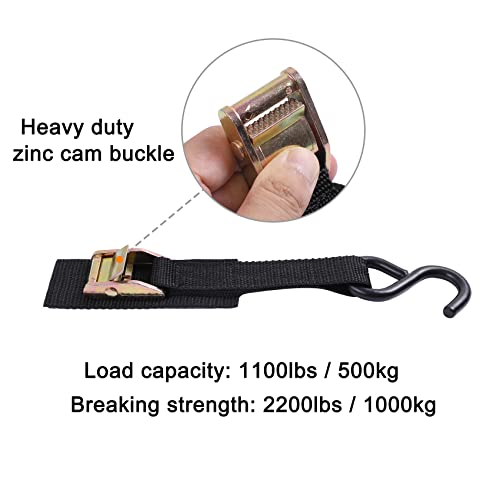
The most critical mistake novice users make is confusing breaking strength with the Working Load Limit (WLL). Breaking strength is the theoretical amount of force required to snap the strap or mechanism entirely. However, you should never load a strap near its breaking point. Instead, always look for the WLL, which is the maximum weight the strap is safely rated to hold under normal operating conditions. When selecting your ratcheting system, calculate the total weight of your cargo and ensure your combined WLL exceeds that weight. For heavy-duty hauling, look for straps with high-density polyester webbing, as this material offers minimal stretch, keeping your load stable over long distances.
Ratcheting Mechanism Durability and Operation
The ratchet handle is the heart of the system. A low-quality ratchet can jam, slip, or even fail under tension. When evaluating a product, look for heavy-duty zinc-plated or steel handles that feel substantial in the hand. A smooth, fluid clicking mechanism is a sign of high-quality internal gearing. Furthermore, consider the ergonomics of the handle. Some designs include a finger guard to prevent pinching, which is a significant safety benefit during repetitive use. If you frequently work in wet or muddy conditions, prioritize ratchets with corrosion-resistant coatings to prevent the mechanism from seizing up over time.
Webbing Width and Material Composition
The width of the webbing dictates how much surface area is applied to your cargo. Wider straps (such as 2-inch or 3-inch widths) are preferable for heavy loads because they distribute pressure more evenly, reducing the risk of crushing delicate items or denting metal surfaces. For lightweight recreational gear, narrower straps may suffice and offer easier storage. In terms of material, high-tenacity polyester is the industry standard because it is resistant to UV degradation, moisture, and most chemicals. Avoid nylon if you are securing loads that will be exposed to constant sunlight, as nylon can lose strength when wet and is more prone to UV damage.
Hardware and End-Fitting Security
A tie-down is only as strong as its weakest link, which is often the hook. Ensure the hooks are made of forged steel rather than cast metal, as forged steel is significantly more resistant to bending and snapping under sudden impacts. Look for J-hooks or S-hooks that have a deep throat to ensure they won't slip off the anchor point during transit. Additionally, check the quality of the stitching at the connection points. Reinforced, multi-row stitching is essential to prevent the webbing from fraying or pulling away from the metal hardware under extreme tension.
To make the final decision, categorize your primary use case. If you are a professional contractor hauling construction materials, prioritize high WLL ratings and heavy-duty steel hardware. If you are an outdoor enthusiast, focus on UV-resistant materials and compact, lightweight designs that are easy to pack. For general home use, a versatile mid-range kit with a variety of lengths will provide the best value. Always choose a set that provides a margin of safety—if your load is 1,000 lbs, do not settle for a kit with exactly 1,000 lbs of WLL. Aim higher to account for road vibrations and sudden braking.