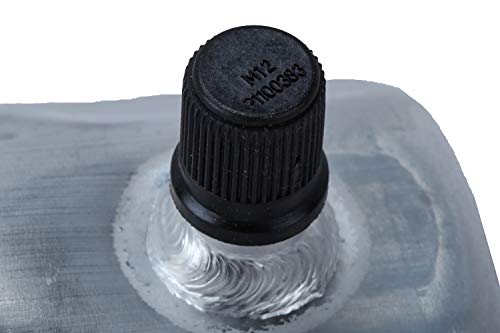
Understanding Assembly vs. Component Replacement
The primary decision when facing an A/C failure is whether to replace a single part or the entire assembly. For GM owners, choosing a full assembly is often the superior long-term strategy. When you replace just a compressor, you risk introducing debris from a failed old compressor into the new unit, which can lead to immediate failure. A complete assembly typically includes the compressor, condenser, accumulator/drier, and sometimes the evaporator or expansion valve. By opting for the assembly, you ensure that all seals are fresh, all internal passages are clean, and the entire system is primed for a single, successful vacuum and recharge process.
Key Decision Factors: OE Specification vs. Aftermarket
When browsing assemblies, you will encounter two main paths: Original Equipment (OE) style and aftermarket alternatives. OE-style assemblies are engineered to match the exact displacement and duty cycle of the unit that left the factory. This is critical for GM vehicles equipped with heavy-duty cooling packages, such as those found in Silverado or Sierra trucks. If your vehicle is used for towing or heavy hauling, stick to assemblies that emphasize high-capacity compressors. Aftermarket assemblies are often more budget-friendly, but you must verify that the condenser thickness and the compressor's clutch engagement patterns are compatible with your vehicle's electrical architecture.
Critical Compatibility Checkpoints
Because GM has produced millions of vehicles across diverse platforms (from compact crossovers to heavy-duty diesel trucks), 'universal' fitment is a myth in the A/C world. When selecting an assembly, you must focus on three technical pillars: 1) The refrigerant type (R134a vs. the newer R1234yf), 2) The mounting configuration of the compressor, and 3) The inlet/outlet port orientations on the condenser. Even a slight variation in the mounting bracket or the hose connection points will render an assembly useless. Always prioritize assemblies that specify compatibility with your specific engine type, as the belt routing and pulley offset can vary significantly between a V6 and a V8 configuration.
Evaluating Build Quality and Longevity
A high-quality assembly is defined by its sealing integrity and the quality of its internal components. Look for assemblies that feature high-grade aluminum condensers with multi-layer fin structures. These dissipate heat more effectively, reducing the load on the compressor. Furthermore, check if the accumulator/drier is included in the kit. The drier is responsible for removing moisture from the system, and installing an old, moisture-laden drier with a new compressor is a recipe for system failure. A premium assembly will provide a 'closed-loop' sense of security, where every component is tested to work together under high thermal stress.
Installation Readiness
Finally, consider the 'installability' of the kit. The best assemblies are those that include all necessary mounting hardware and O-rings. Since A/C systems are highly sensitive to air and moisture, having the correct, factory-spec seals included in your assembly prevents the need for mid-job trips to the parts store, which can introduce contaminants into your open lines.