Prioritize Paper Quality and Archival Integrity
The most important factor in a laboratory notebook is the paper itself. In a lab setting, you are often working with chemicals, solvents, or varying humidity levels. You must look for acid-free, archival-quality paper. Acid-free paper ensures that your entries will not yellow or degrade over decades, which is essential if your research is ever audited or used in patent litigation. Furthermore, consider the weight (GSM) of the paper. Heavier paper prevents 'ghosting' or ink bleed-through, which is particularly important if you are using fountain pens or fine-liner archival pens to ensure every stroke is permanent and legible.
Binding Styles: Thread-Sewn vs. Spiral
The way a notebook is held together dictates how it will survive daily use. For professional laboratory environments, thread-sewn binding is the gold standard. Thread-sewn notebooks allow the book to lay flat on a benchtop, which is crucial when you are trying to write while wearing gloves or working with one hand. More importantly, thread-sewn binding prevents pages from being easily torn out. In legal and scientific contexts, a notebook with missing pages can be seen as evidence of data tampering. While spiral-bound notebooks offer ease of turning pages, they are generally less suitable for formal, permanent record-keeping due to the risk of page loss and the difficulty of maintaining a continuous, tamper-evident volume.
Ruling and Layout Requirements
The internal layout of your notebook should match your specific workflow. If you are performing quantitative analysis, a grid or graph-ruled notebook is indispensable for plotting curves and sketching experimental setups. For qualitative observations or long-form descriptive protocols, lined (ruled) pages are more efficient. Some researchers prefer a hybrid approach, such as dot-grid layouts, which offer the flexibility of a blank page with the structural guidance of a grid. Always ensure the ruling is subtle enough that it doesn't interfere with your sketches but distinct enough to maintain organized columns of data.
Cover Durability and Portability
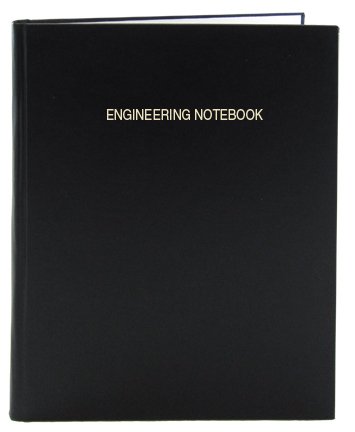
Laboratory notebooks are often subjected to rough handling, being tossed into backpacks, or sitting on chemical-resistant countertops. A hardbound cover provides a stable writing surface when a desk is unavailable, which is a common occurrence in field research or crowded labs. Look for covers made from heavy-duty cardboard or reinforced materials that can withstand moisture and frequent handling. Additionally, consider the size. While A4 or Letter size provides ample room for complex data, a smaller B5 or A5 format might be more practical if you are frequently moving between different workstations or field sites.
Decision Logic: Summary of Recommendations
When making your final selection, use this logic: If you are documenting patentable inventions or formal academic research, prioritize a hardbound, thread-sewn, acid-free notebook with numbered pages to ensure a permanent, tamper-evident record. If you are a student or a field researcher needing quick sketches and high portability, a lighter-weight, perhaps slightly more flexible notebook may suffice, provided the paper remains high-quality. Never compromise on paper acid-free status. The cost of a premium notebook is negligible compared to the cost of losing decades of readable data.