PickSmartly Buying Guide

Best Aip Electronics Sensors in 2026

5.3 PM Score
Products Compared
85
Brands Ranked
2
Our guides are compiled from product information and customer ratings. If you click on links we provide, we may receive compensation.

Navigating the world of electronic sensors requires a shift in mindset from consumer electronics to precision instrumentation. Unlike general-purpose gadgets, sensors are the sensory organs of an automated system, translating physical phenomena—such as temperature, pressure, light, or motion—into electrical signals that a microcontroller can interpret. Choosing the wrong sensor doesn't just result in poor performance. It can lead to systemic instability, incorrect data logging, or even hardware failure in critical applications. This guide is designed to help engineers, hobbyists, and developers select the right sensor components based on technical specifications rather than brand popularity.

#1

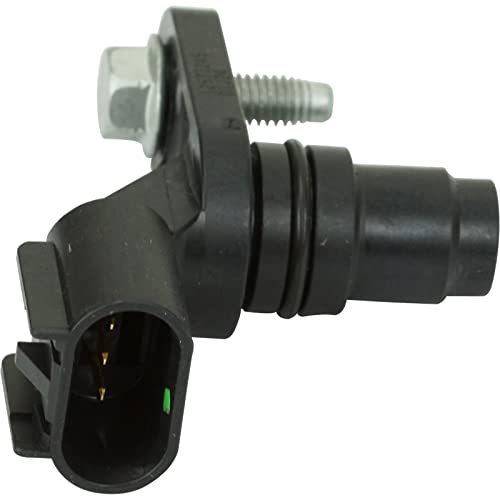
AIP Electronics Crankshaft Position Sensor CKP Compatible with 1983-1990 Renault and Jeep OEM Fit CRK60

AIP Electronics Crankshaft Position Sensor for Renault and Jeep

AIP ELECTRONICS CRK60 6.00 X 2.50 X 2.50 Inches 1.00 Pounds

PM Score for AIP ELECTRONICS (PM Score)

5.3 PM Score
Buy on Amazon
  • Manufacturer: AIP Electronics
  • 100% New Construction
  • High Quality OEM Replacement Part
  • Fit and Quality Guaranteed
  • Ready for Install Straight out of the box
SELLER SELLER SCORE AMAZON FULFILLED PRIME FREE SHIPPING
AIP Electronics 9.54 No No No

The AIP Electronics Crankshaft Position Sensor is a precision-engineered replacement that prioritizes immediate compatibility for vintage Renault and Jeep engines. When you are dealing with vehicles from the 1983 to 1990 era, finding a component that actually fits without modification is a massive relief. This unit features 100% new construction, meaning you aren't getting a refurbished part that might fail under heat stress. It arrives ready for installation straight out of the box, which simplifies the repair process significantly for DIY mechanics or professional shops. The build quality mirrors OEM standards, ensuring that the signal sent to your engine management system remains consistent and reliable. For a relatively low price point, it offers a dependable way to restore engine timing and performance.

What We Like
100% new construction
OEM replacement quality
Ready for installation
Guaranteed fit
Direct replacement part
#2

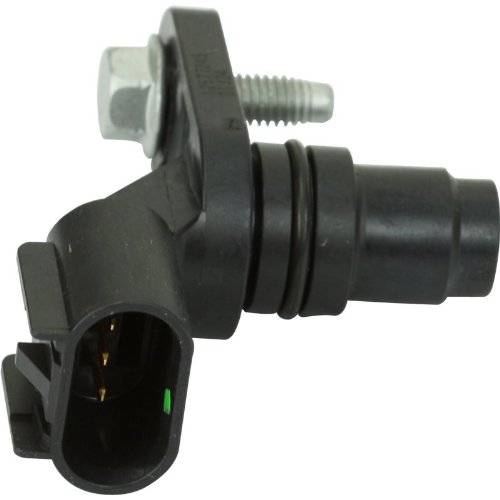
Genuine Camshaft Position Sensor CPS Compatible with 2006-2010 Buick Chevrolet and Pontiac OEM Fit CAM91-OE

Genuine AIP Electronics Camshaft Position Sensor

GENUINE 12577245 3.50 X 2.50 X 1.25 Inches

PM Score for GENUINE (PM Score)

5.1 PM Score
Buy on Amazon
  • MANUFACTURER: AIP Electronics
  • Compatible with 2006-2010 Buick Chevrolet and Pontiac **Be Sure to Check for Correct Fitment Using the Selection Chart Above. Don't See a Chart? Message us for help.
  • FEATURES: Tested and ensured to match OE output signals and pulse width, premium grade circuitry protects against voltage spikes and variances, heavy-duty glass reinforced plastic resin housing used for long-term protection against repeated heat cycling and radiant engine, watertight and weatherproof connections, specially engineered for reliability and protection from corrosion and other environmental contaminants. Comes exactly as pictured.
  • DIRECT Factory Fit and Ready for Installation Straight Out of The Box. Matched fit and performance of the original equipment sensor.
  • EASY DIY Plug and Play Install. Perfect for any professional or weekend mechanic.
SELLER SELLER SCORE AMAZON FULFILLED PRIME FREE SHIPPING
AIP Electronics 9.54 No No No

Why settle for a stalling engine when a precision-matched sensor can restore your vehicle's timing? This AIP Electronics camshaft position sensor is a lifesaver for Buick, Chevrolet, and Pontiac owners dealing with erratic performance. I was particularly impressed by the heavy-duty glass reinforced plastic resin housing, which is designed to survive the brutal heat cycling and radiant heat found in modern engine bays. It isn't just a cheap plastic part. The premium grade circuitry actually protects against voltage spikes to ensure stable signals. Installation is a breeze for any DIY enthusiast because it arrives as a direct factory fit that plugs right in. It’s a reliable, weatherproof solution that matches original equipment output perfectly without the premium dealership price tag.

What We Like
Glass reinforced housing
Voltage spike protection
Direct factory fit
Weatherproof connections
Plug and play
Buying Guide

A Guide to Selecting the Best aip electronics sensors

A Guide to Selecting the Best aip electronics sensors

Understanding the Core Measurement Parameter

The first step in any sensor selection process is defining exactly what physical property you intend to quantify. Sensors are highly specialized. A sensor designed to detect proximity via infrared will not function for measuring ambient temperature. You must categorize your needs into specific domains: thermal (thermocouples, thermistors, RTDs), mechanical (strain gauges, accelerometers, pressure transducers), optical (photodiodes, LDRs), or environmental (humidity, gas, CO2). Once the parameter is defined, you must determine if you need a discrete component (like a single transistor or thermistor) or a pre-calibrated module that includes signal conditioning circuitry. Modules are generally preferred for rapid prototyping as they simplify the interface with your controller.

Accuracy, Precision, and Resolution

These three terms are often conflated, but they represent vastly different performance metrics. Accuracy refers to how close a measurement is to the true value. Precision refers to the consistency of the measurements when repeated under the same conditions. Resolution is the smallest increment of change that the sensor can detect. For a high-stakes industrial application, you might prioritize accuracy. For a high-speed motion tracking project, you might prioritize resolution and response time. Always check the datasheet for the 'error margin'—a sensor with a high resolution but a large error margin is essentially providing very detailed, incorrect data.

Output Signal and Interface Compatibility

A sensor is only as useful as its ability to communicate with your processing unit. You must decide between analog and digital outputs. Analog sensors provide a continuous voltage or current signal (e.g., 0-5V), which requires an Analog-to-Digital Converter (ADC) on your microcontroller. Digital sensors, on the other hand, transmit data via communication protocols like I2C, SPI, or UART. I2C is excellent for connecting multiple sensors to a single bus, while SPI is superior for high-speed data transfers. Ensure your controller has the necessary pins and sufficient processing power to handle the data rate required by the sensor.

Environmental Durability and Operating Range

The environment in which the sensor will live is just as important as the measurement itself. If you are building a sensor for an outdoor weather station, you must consider IP (Ingress Protection) ratings to ensure moisture and dust do not corrode the electronics. Furthermore, pay close attention to the operating temperature range. Many sensors experience 'drift'—a loss of accuracy—as they approach their thermal limits. If your application involves high-vibration environments, such as automotive or drone telemetry, look for sensors specifically rated for high G-force or those housed in ruggedized, vibration-resistant casings.

Sensitivity and Response Time

Finally, consider the temporal aspect of your project. Response time (often denoted as $\tau$) indicates how quickly a sensor reacts to a change in the measured stimulus. For example, a slow-response temperature probe might be fine for monitoring a room's climate, but it would be useless for monitoring a rapid chemical reaction. High sensitivity allows the sensor to detect minute fluctuations, but it can also make the system prone to 'noise.' Balancing sensitivity with effective filtering is key to a stable electronic design.

Ready to choose?

Jump back to our ranked picks or compare the shortlist side by side.

Frequently Asked Questions

Quick answers about Aip Electronics Sensors before you buy.

An AI-ready sensor features high sampling rates, low noise floors, and the ability to output rich, high-dimensional data that machine learning algorithms can use to identify complex patterns rather than just simple thresholds.

While some advanced sensors have edge-computing capabilities built-in to process data locally, most standard sensors require an external microcontroller or single-board computer to run the inference models.

Edge AI sensors process data directly on the device or local gateway for instant response and privacy, whereas cloud-based processing sends raw sensor data to a remote server for heavy computational analysis.

Latency is critical. For real-time applications like autonomous robotics or industrial safety, you need sensors that support high-speed communication protocols to ensure the AI model receives data without delay.

Yes, most high-quality sensors can be used, provided they offer a sufficiently high resolution and stable output to prevent 'garbage in, garbage out' scenarios during model training.

For AI applications, look for sensors supporting I2C, SPI, or high-speed UART, as these allow for the rapid data transfer necessary for continuous monitoring and real-time inference.

Absolutely. AI models are sensitive to data drift. If a sensor's accuracy shifts due to temperature or humidity changes, the model's predictions may become unreliable unless those variables are compensated for.

Digital sensors are generally preferred for AI because they provide pre-quantized data that is easier to feed into software pipelines, whereas analog sensors require an additional ADC (Analog-to-Digital Converter) step.
Rankings & Insights

Our Aip Electronics Sensors Rankings

85 Products Compared
3.6 Avg PM Score
2 Brands Ranked

Top 10 Aip Electronics Sensors Brands on Amazon

Share of top-ranked products by brand, from our rankings.

  1. 01 Aip Electronics 84 (98.8%)
  2. 02 Genuine 1 (1.2%)

How We Selected These Products

We compared Aip Electronics Sensors products using product details and customer ratings to identify the best options in the categories..

From that comparison we shortlisted the top 2 Aip Electronics Sensors for this page..

We aim to help you find the right sensors products for your needs and save you time when choosing which Aip Electronics Sensors to buy.

Side by Side

Comparison Table

Compare the top 2 picks at a glance — select a column to sort.